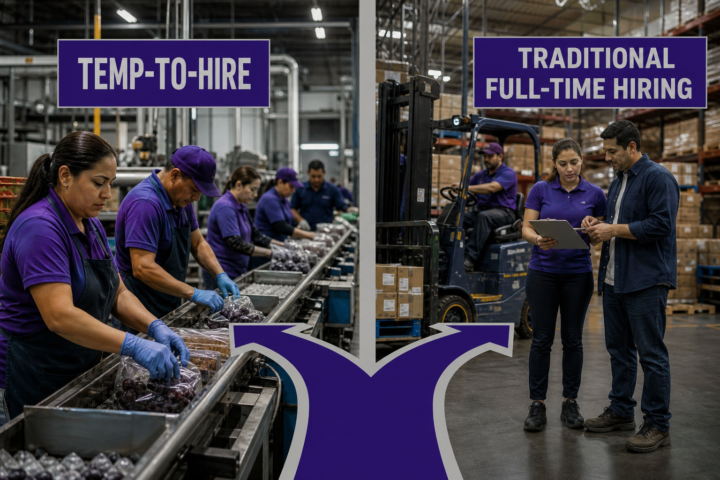
Temp-to-Hire vs. Traditional Full-Time Hiring: Which Model Works for Your Team
If you’re a hiring manager at a manufacturing facility or distribution center, choosing between temp-to-hire and traditional full-time hiring is a decision that directly impacts overtime costs, staffing flexibility, and team dynamics. This guide is for operations leaders, plant managers, and HR professionals who need a practical framework to decide which model best fits their workforce challenges in 2026. One pattern we see: teams that succeed here typically define the outcome they want before selecting a path, then map a concrete implementation plan around that goal.
Why the hiring model matters for frontline teams
In industrial contexts, warehousing, manufacturing lines, and field operations, the right staffing model affects crew consistency, training ramp-up, and safety compliance. Temp-to-hire offers a way to test skills, build culture knowledge, and reduce long-term hiring risk. Traditional full-time hiring emphasizes stability, career progression, and long-term organizational memory. Understanding these fundamental trade-offs helps you align your approach with your production schedules, safety standards, and budgeting cycles.
Not sure which hiring model fits your workforce needs?
Explore Our Staffing Solutions
Key considerations for choosing a model
-
Forecasting demand: If demand is volatile or seasonal, temp-to-hire provides flexibility to scale up or down without immediate long-term commitments.
-
Skill verification: Temp staff can be evaluated on work history and on-the-floor performance before becoming permanent hires, reducing mis-hires.
-
Cost of turnover: Traditional hires carry onboarding, benefits, and long-term compensation considerations; temp arrangements can mitigate some of those fixed costs during ramp periods.
-
Compliance and safety: Consistent training across models ensures adherence to industry standards without sacrificing speed.
In our experience, the most effective staffing programs blend both approaches. You might use temp-to-hire for high-variability shifts or pilot roles, then convert strong performers to full-time roles to anchor your core operations. For a structured implementation, map your peak and off-peak periods, list critical skills, and assign decision points for conversion or extension.
How temp-to-hire works in practice
Temp-to-hire typically starts with a temporary engagement, followed by a formal evaluation period. The objective is to confirm the candidate’s reliability, safety attitude, and job-specific competencies before offering a permanent position. This approach can help you protect production flow during busy cycles and identify cultural fit early. It also gives workers a real sense of what it’s like to work within your facility before committing long-term.
Implementation patterns that commonly succeed
-
Structured trial window: Define a60- to90-day period with clear milestones (quality metrics, attendance, safety compliance).
-
On-the-floor training plan: Pair temp staff with seasoned operators to accelerate learning and reduce rework.
-
Transparent conversion criteria: Publish the performance benchmarks that trigger a full-time offer, so expectations are clear.
-
Candidate experience: Maintain consistent communication about conversion timelines and feedback, preserving morale and trust.
From a credibility perspective, practitioners in this space consistently note that successful temp-to-hire programs are grounded in clear performance expectations and early risk management. This ensures the ramp process doesn’t become a bottleneck and that risk is managed from day one.
Ready to put temp-to-hire to work for your team?
How traditional full-time hiring works for teams
Full-time hires bring consistency, knowledge retention, and long-term career development opportunities. They support leadership continuity, ongoing training programs, and a stable supervision structure. However, traditional hiring can be slower, and the initial cost of benefits, onboarding, and retention expectations can be higher, particularly in tight labor markets. The upside is a dedicated, invested workforce that tends to stay and grow with the business when the role and growth path are clear.
Practical approaches for robust full-time hiring
-
Proactive talent pipelines: Build a pool of qualified workers with the right background and certifications before peak seasons hit.
-
Structured onboarding: Create role-specific training checklists and safety certifications to accelerate time-to-productivity.
-
Growth pathways: Map promotions, cross-training, and skill upgrades to improve retention and morale.
-
Data-informed recruitment: Track time-to-fill, quality of hire, and safety incident rates to optimize the process.
Teams that implement long-term hiring thoughtfully tend to achieve stronger supervisor-employee alignment and more rapid adoption of standard operating procedures. A disciplined approach to onboarding and ongoing development is often the differentiator that turns a full-time hire into a high-value team member.
Choosing the right mix for your operation
The best plan often combines both models to match demand cycles and strategic goals. For example, you might use temp-to-hire for seasonal peaks or roles with episodic demand, while committing to traditional full-time hires for core maintenance, quality assurance, and supervisory positions. The goal is to maximize output while maintaining safety and quality standards, without overextending your compensation and benefits framework.
Ready to find your next opportunity?
Common questions about temp-to-hire and full-time hiring
FAQ
-
What is the primary advantage of temp-to-hire for manufacturing and warehouse roles?
Temp-to-hire offers flexibility to match staffing to demand, reduces long-term staffing risk, and allows you to objectively evaluate performance and fit before making a permanent offer.
-
When should I favor traditional full-time hires over temp-to-hire?
When you need consistent, long-term knowledge retention, strong team culture, and clear career pathways that support retention and leadership development.
-
What risks should I watch for with temp-to-hire?
Potential risks include misalignment on safety practices, training gaps if ramp time is too short, and higher administrative overhead for managing a large temporary workforce.
-
How can I made a fair conversion decision for temp staff?
Define objective performance criteria, ensure transparent feedback, and align conversion with budget and workforce planning. Document the criteria and communicate them early to the worker.
-
What metrics matter most when evaluating which model to use?
Quality of output, attendance and reliability, safety incident rates, time-to-productivity, and cost-to-serve during peak periods provide the clearest signals to adjust staffing strategy.
-
How can Full Steam Staffing help with this decision?
We offer tailored guidance on forecasting demand, designing conversion criteria, and implementing robust onboarding and safety training to optimize whichever model fits your operation. Our experience spans nationwide manufacturing and distribution environments.
Build the Right Workforce for What Comes Next
Whether temp-to-hire, direct hire, or a combination of staffing solutions makes the most sense for your operation, the right strategy starts with understanding your workforce goals. Full Steam Staffing can help you build a flexible hiring approach that supports productivity, adapts to changing demand, and positions your team for long-term success.
Ready to strengthen your workforce?